Start with the symptom
Is the detector causing the door problem?
A safety edge is one part of the door system. The same symptom can come from detection equipment, the mechanism, a door operator or a locking problem. Tell us what you have noticed; you do not need to identify the faulty part before contacting us.
Doors repeatedly reopen
We check whether a detector signal is requesting reopening or whether resistance or another door-system fault is interrupting closing.
Doors stay open with a clear entrance
Detector alignment, contamination, cables, power or an interface fault may need attention. Other signals can also hold the doors open.
The fault comes and goes
Tell us when it has already happened. An engineer can assess moving cables, connections, mounting and the conditions around the entrance.
A strip or cable is damaged
Share an existing report or a photo taken safely from the passenger area. We assess the damage and identify compatible replacement equipment.
Examples of detector-related faults are described in the WECO G5 manufacturer manual (PDF). They are possibilities to investigate, not a diagnosis of your lift.
Unexpected door contact or a safety concern?
Stop using the lift and notify the building team and maintenance provider promptly. Do not test the detector with your body, force the doors or bypass a device. For an urgent breakdown, call 020 7097 8588.
Safety edge, detector edge or light curtain?
These names are often used together, but the protection fitted to a lift can work in different ways.
- Mechanical safety edge
- A moving edge operates when it makes contact with an obstruction. Its mechanism and switch signal need to work with the door system.
- Infrared detector edge or light curtain
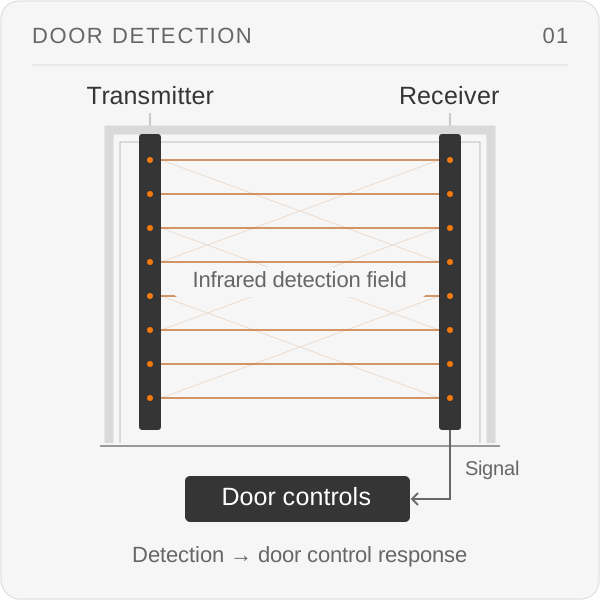
- A transmitter and receiver monitor beams across the entrance. An interruption is signalled to the door controls so they can respond, normally by stopping closing and reopening.
Some selected systems also detect within an area in front of the doors. MEMCO by AVIRE’s Panachrome+ range illustrates the difference between 2D and 3D options. Features and detection limits vary by model.
The detector does not move the doors itself or prove that a landing door is locked. The door operator provides the movement; door locks and interlocks have a separate safety function.
Repair the fault or replace the equipment?
Support across a wide range of brands
We work with lift door detection equipment from manufacturers including MEMCO by AVIRE, WECO, CEDES and Wittur/Selcom. These are examples of the brands we can help with. We also assess other makes and older equipment, so contact us even if your detector brand is not listed.
A replacement is selected for the door arrangement, physical clearance, mounting, power supply and control interface. Matching the length or lift brand alone is not enough.
For an older lift, we can assess whether a detector upgrade is practical within the existing door system or should form part of a wider lift modernisation. The equipment, installation work and any additional changes are set out in the quotation.
From fault finding to a working installation.
Identify the system and the cause
We review the reported behaviour and existing equipment, including how the detection signal reaches the door controls. Where the fault lies elsewhere, we explain the relevant door repair options.
Agree and carry out the work
The scope identifies the detector equipment and any cables, fixings, power unit or interface changes needed. We agree access and the planned interruption to lift use before the installation.
Check the complete response
Checks cover the installed detection system and the door response, following the applicable manufacturer instructions and installation requirements. The job sheet records work carried out, lift status and any outstanding actions.
Planned lift maintenance provides ongoing attention to the doors and detection equipment under the agreed service scope. A new detector still needs appropriate care.
What does a safety edge replacement cost?
The quotation needs to cover the installed system, not just a pair of detector strips. The main factors are:
- Diagnosis: whether the cause is known or further fault finding is needed.
- Equipment: the detector type and any matching cables, power unit, controller or fixings.
- Installation: access, door configuration and changes to the existing mounting or interface.
- Completion: commissioning checks, the number of entrances and any further visits.
Send the site postcode and fault details for a discussion or quotation. We confirm compatibility, availability, lead times and price for the selected equipment. Our repair cost guide explains how investigation and follow-up work can affect the total.
A practical limit of door protection
Do not rely on detectors to catch a thin lead.
A light curtain should not be assumed to detect a dog lead, a child’s rein or every small object. Keep people, animals and the whole lead or strap together on the same side of the doors.
Keeping dogs and leads safe around lifts explains the risk. Liftinstituut’s safety guidance also warns that a lead can be missed by the sensors.
Safety and detector edge questions.
Will a new safety edge stop the doors reopening?
Only if the fault is in the equipment being replaced and the replacement is correctly installed. Door resistance, an operator fault or other control signals can produce similar symptoms. Investigation helps avoid replacing the wrong component.
Can you replace a detector on an older lift?
Often there are options, but the installation needs assessing. We check available space, door movement, power and the control interface, along with the protection required. The proposal explains any associated changes.
Can we choose an edge just from the lift manufacturer?
The detector may have been changed during an earlier repair or upgrade. Existing equipment references, door details and recent job sheets are more useful than the lift brand alone. We can discuss identification if you do not have those records.
Do you install the replacement detector?
Yes. We supply and install suitable equipment across London and the South East. The quotation confirms the equipment, fitting and checks for your lift. You do not need an existing maintenance contract with Forge to enquire.
Does replacing the safety edge make the whole lift compliant?
A detector’s product specification does not establish the condition or compliance of the whole lift. Its suitability and integration need assessing, and other findings or required work remain separate. Tell us if you have an examination report or an upgrade specification.
Repairs · Replacement · Installation
Tell us what the doors are doing.
You can start with the location and the problem. There is no need to diagnose the fault or select a detector first.
Useful details, if you have them
- Site postcode, lift location and number of entrances affected.
- What has happened, including any pattern already noticed.
- Detector or door-operator make and model from existing records.
- Recent reports, outstanding recommendations or safely taken photographs.
Use records or photos taken from safe, accessible areas. You do not need to remove panels, measure moving equipment or enter the shaft to make an enquiry.
The form carries the safety-edge category across for you to check or change. The email link opens your email app, where you can attach files.
Related equipment & support
Other parts of the door system.
- Lift door operators — the drive and control equipment that moves the doors.
- Door rollers and spares — components that support and guide door movement.
- Recurring lift breakdowns — keeping a useful history when a fault returns.